At a glance
- Unvented rules
- Building Regulations Part G3
- Servicing
- Every 12 months
- Warning sign
- Water running from the tundish
Hot Water Cylinders in St Helens
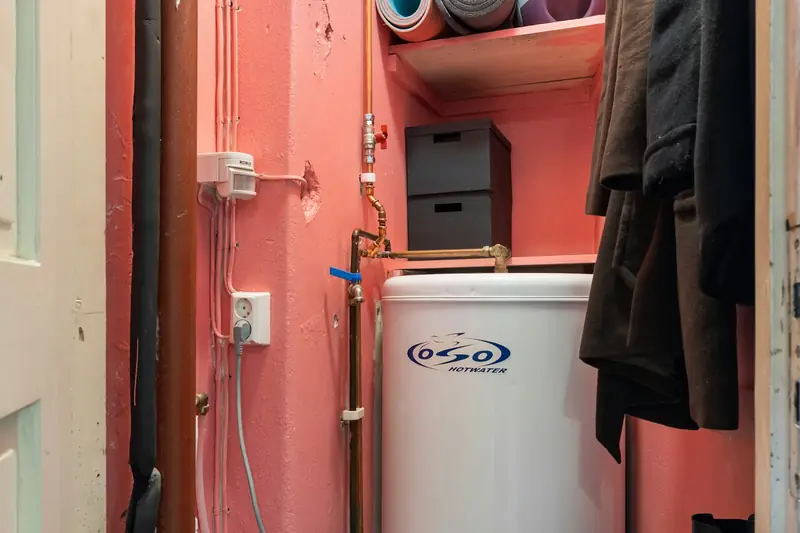
Your hot water cylinder does a lot of quiet work, and you only notice it when it stops. We install, replace, service and repair hot water cylinders across St Helens, from Earlestown to Rainhill. That covers modern unvented cylinders, traditional vented copper ones, immersion heaters and smaller electric water heaters.
Matthew holds the G3 unvented qualification, and he is Gas Safe registered (number 653634), so the cylinder and the boiler heating it can be looked after by the same engineer. That matters, as only a G3-qualified installer should fit or service an unvented cylinder.
Vented vs Unvented Hot Water Cylinders
A vented cylinder is the traditional copper tank in the airing cupboard. It's fed by a cold water storage tank in the loft, and the pressure at your taps depends on how high that tank sits. Upstairs showers are often weak without a pump.
An unvented cylinder is fed straight from the cold mains, so there's no loft tank. The water is stored under mains pressure and protected by a set of safety devices. People often call any unvented cylinder a "megaflow", but it's a type of cylinder, and several makers produce them.
Vented Copper Cylinders
Plenty of St Helens homes still have a vented cylinder, and there's nothing wrong with that if it works for you. They're simple, quiet and don't need an annual safety service. We repair and replace them like for like, including direct cylinders heated only by an immersion and indirect ones heated by the boiler through a coil.
If a vented cylinder is leaking, has a failed coil or takes an age to heat, a straight replacement is often the quickest fix. If you've always had weak showers, it may be time to think about unvented instead. Before replacing like for like, Matthew checks the loft tank too. An old tank with a loose lid or no insulation can let debris in and freeze in winter, so it's often worth changing at the same time.
Unvented Cylinder Installation
An unvented cylinder gives strong, mains pressure hot water to every tap and shower at once. The main benefits are:
- Mains pressure hot water, giving strong showers upstairs and down without a pump
- Several taps at once, handy for busy homes with more than one bathroom
- No loft tank, freeing up space and removing the risk of a tank freezing or leaking
- Quieter, with no tank filling noises above the ceiling
It suits system and regular boilers, and it needs good mains pressure and flow, so we test your supply first. It also needs a cupboard big enough for the cylinder and expansion vessel, and a discharge pipe to a safe point outside. If you're planning a new shower to go with it, see our shower installation page.
G3 regulations and why they matter
Unvented cylinders fall under Building Regulations Part G3. Because they hold hot water under pressure, they must be installed by a competent person with the G3 qualification, notified to building control, and serviced every year. When we install one, you get the commissioning checklist and the building control notification, which you'll need when you sell the house.
Unvented Cylinder Servicing
An annual service keeps the safety devices working, and most manufacturers need it for the warranty. Matthew checks the expansion vessel charge, the pressure reducing valve, the temperature and pressure relief valve, the tundish and discharge pipe, the immersion heater and the cylinder thermostat and motorised valve. It's easy to book alongside your annual boiler service, so both are done in one visit.
Replacing an Old Hot Water Cylinder
If your cylinder is leaking, the coil has failed or you're fed up with poor pressure, it's time to look at a replacement. We remove the old cylinder, and the loft tank if you're going unvented, check the pipework is sized for the new setup and fit the new cylinder with its controls.
Going from a cylinder to a combi
Some homes are better off without a cylinder at all. A combi boiler heats water on demand, frees up the airing cupboard and removes the loft tanks. It suits smaller homes with one bathroom, but it struggles with two showers at once. Our new boiler installation page explains the options, and Matthew will tell you honestly which fits the way you use hot water.
Immersion Heaters
Most cylinders have an immersion heater, either as the main heat source or as a backup. When the water stays cold with the immersion on, the cause is usually:
- A failed element, often after years of limescale build-up
- A faulty thermostat, which may stop the heater working or let the water get too hot
In hard water areas, scale builds up on the element and it works harder for less hot water. Setting the thermostat sensibly helps it last longer, and the stored water should still be hot enough to keep it safe. We drain the cylinder down, fit a replacement element or thermostat and refill and test it. The electrical supply to the immersion must be safe and correctly rated, and we'll flag anything that needs an electrician.
Electric Water Heaters
Point-of-use and undersink water heaters are small electric units that heat water for one tap, such as a cloakroom basin, a utility sink or an outbuilding far from the boiler. They're a handy fix where running a hot pipe would be awkward or wasteful.
We handle the plumbing side: the cold feed, the hot outlet to the tap, isolation valves and any pressure or expansion fittings the unit needs. the electrical connection for water heaters is made by a qualified electrician we work with.
Warning Signs Your Cylinder Needs Attention
Call us if you notice water dripping through the tundish, the discharge pipe running or steaming, no hot water or only lukewarm water, hot water pressure that surges and drops, or banging from the cylinder cupboard. A leaking cylinder, or steam from the discharge pipe, is an emergency. Switch off the boiler and immersion and call our 24/7 emergency plumber line. If you can't find the leak, our leak detection service will trace it.