At a glance
- Types
- Wet (boiler) or electric mats
- Best time to fit
- When the floor is being laid
- Runs at
- A lower water temperature than radiators
- Works with
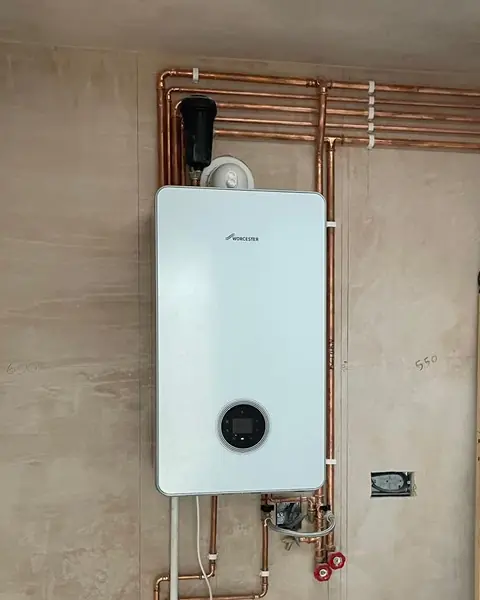
- Most combi and system boilers
Underfloor heating in St Helens
Underfloor heating warms a room from the floor up, with no radiators on the walls. It is a popular choice for kitchen extensions, open-plan living spaces and bathrooms, where wall space matters and tiled floors would otherwise feel cold underfoot.
Matthew fits both main types. A wet system runs warm water from your boiler through pipes under the floor. An electric system uses thin heating mats laid under the tiles. He also repairs and rebalances existing systems that have stopped heating properly.
Wet or electric: which suits your room?
| Wet (water) underfloor heating | Electric underfloor heating | |
|---|---|---|
| Best for | Extensions, kitchens, open-plan rooms, whole floors | Bathrooms, en-suites, small rooms |
| Heat source | Your gas boiler, through a manifold | Mains electricity, through its own thermostat |
| Cost to fit | Higher | Lower |
| Cost to run | Lower | Higher |
| Floor build-up | Pipes in screed, or low-profile boards | A few millimetres under the tiles |
As a rough guide, if the room is bigger than a bathroom or you want a whole floor heated, wet is usually the better long-term choice. For a single bathroom refit, electric mats are quick and tidy. The wiring for electric mats is done by a Part P registered electrician Matthew works with.
How a wet system is put together
Every wet underfloor system has the same main parts:
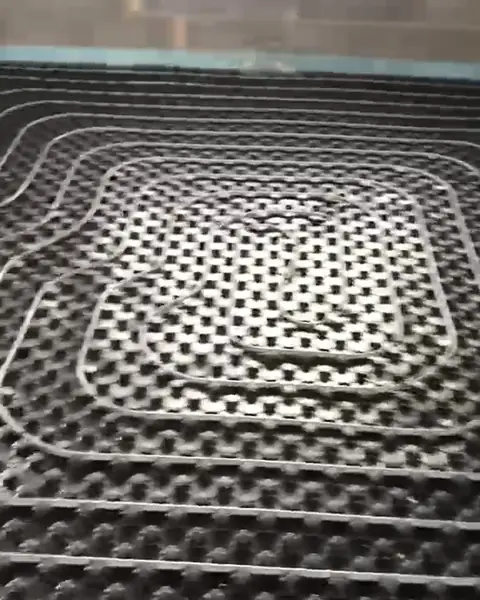
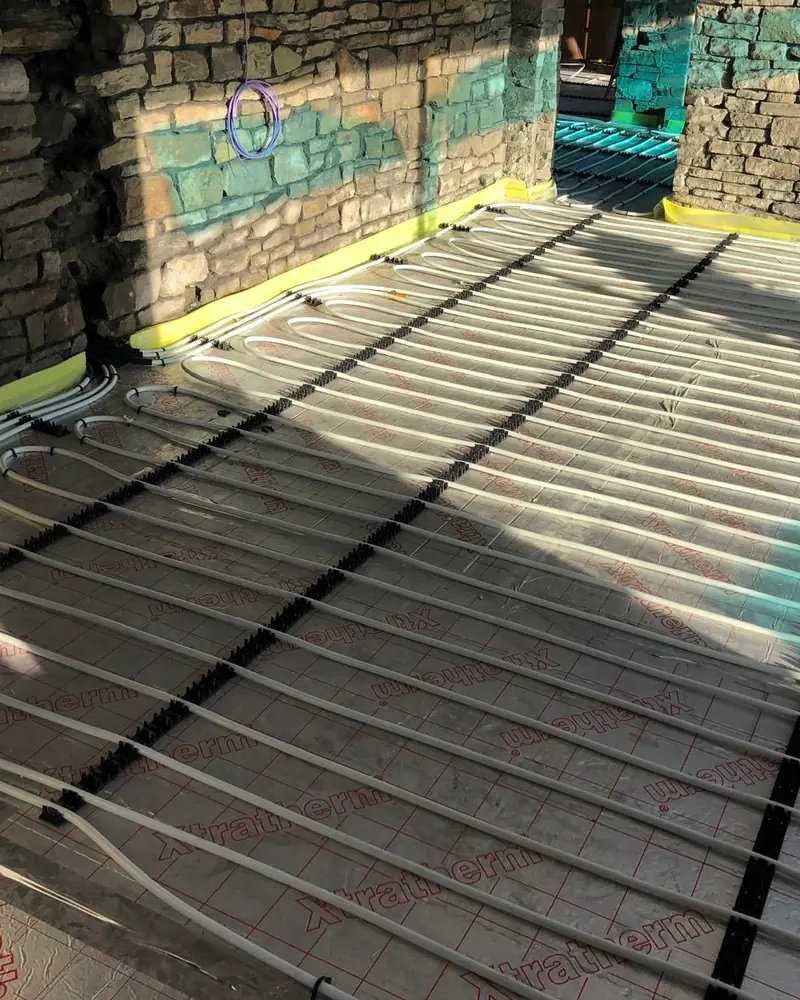
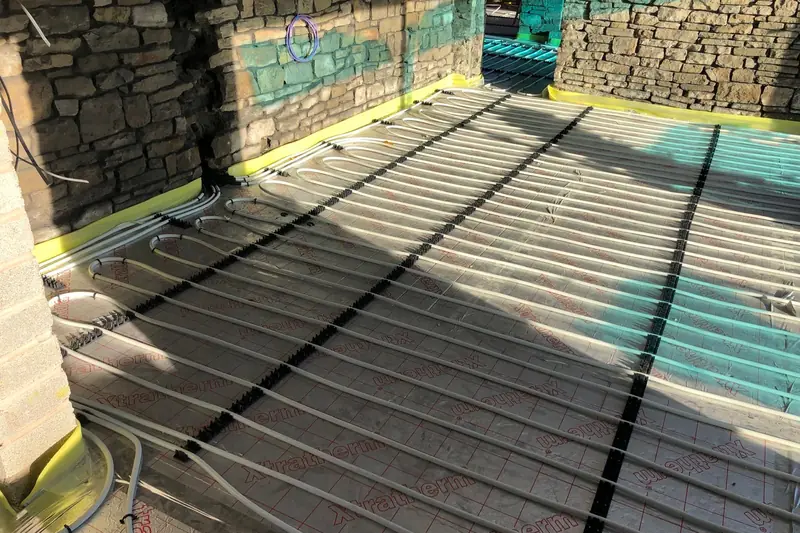
- Pipe loops laid in each room, either set into a new screed or clipped into insulated boards.
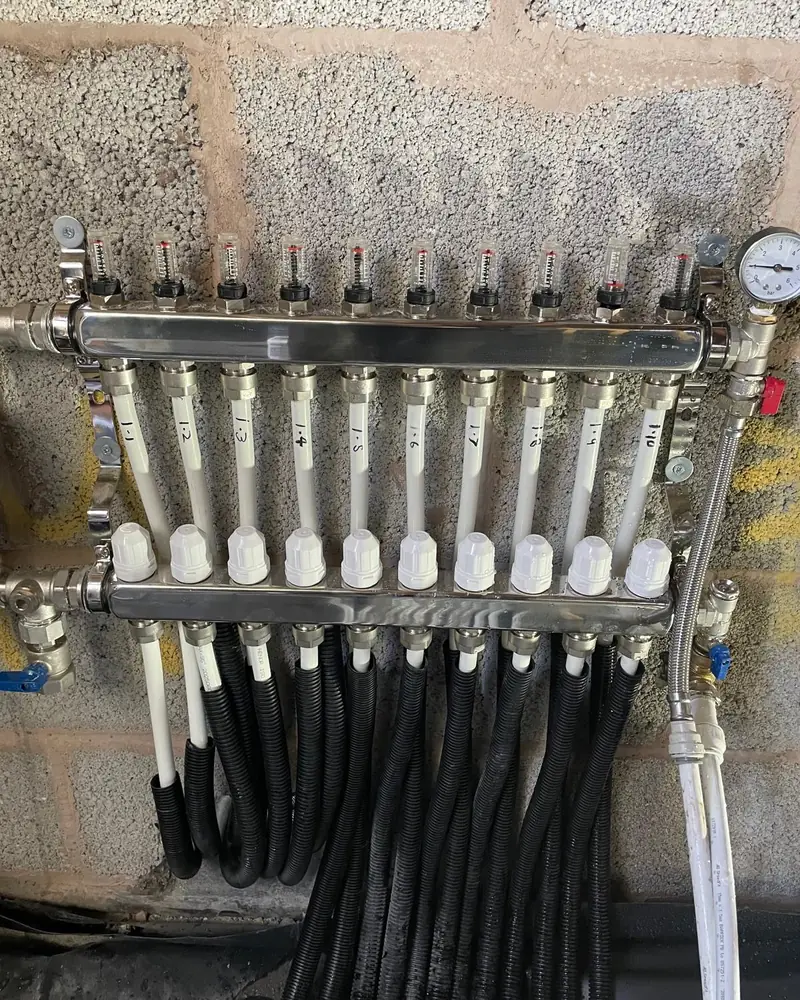
- A manifold, usually in a cupboard or under the stairs, which splits the flow between the loops.
- A pump and mixing valve on the manifold, which bring the water down to the lower temperature underfloor heating runs at.
- A thermostat in each zone, so the kitchen and the lounge can be set separately.
Underfloor heating runs at a much lower water temperature than radiators, which is why it feels gentle rather than hot. It is perfectly normal to keep radiators upstairs and underfloor heating downstairs on the same boiler. If the boiler is old or short on output, Matthew will tell you before the floor goes down, and can quote for a new boiler at the same time.
New floors and extensions
The best time to fit underfloor heating is when the floor is being laid anyway. In a new extension, insulation goes down first, then the pipes, then the screed. The screed needs time to cure before the heating is brought up to temperature slowly over several days, which stops it cracking.
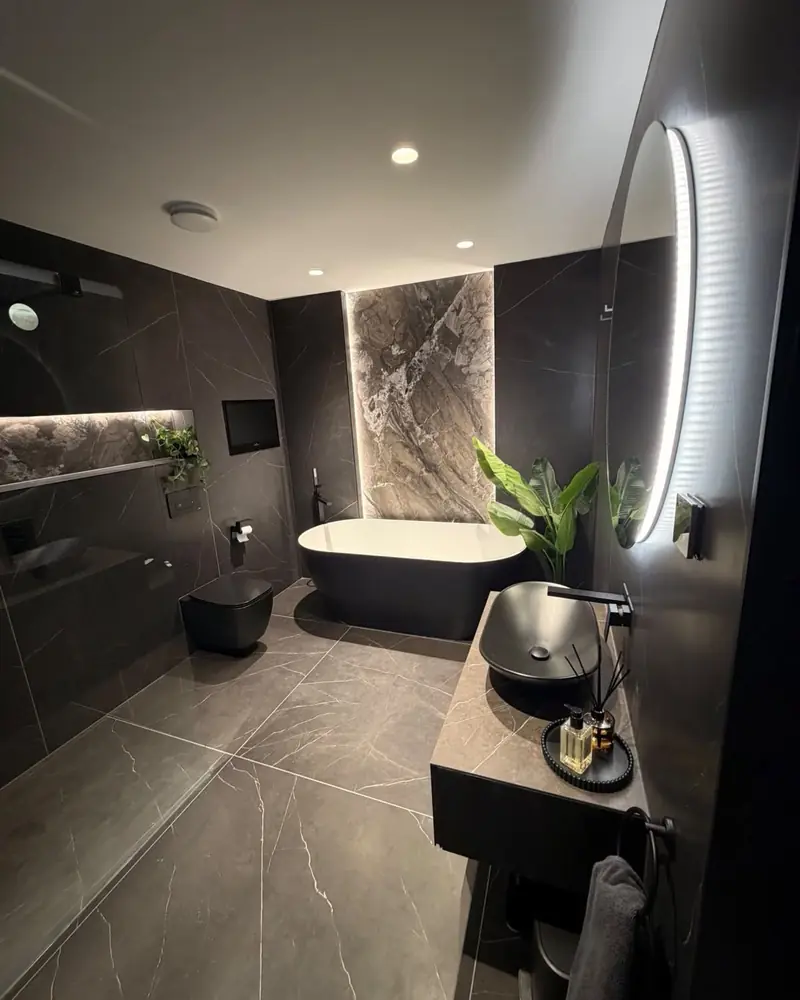
Matthew works with your builder on the order of jobs, so the pipework is tested under pressure before anything is buried. Planning a new bathroom or a wet room? Underfloor heating pairs well with both, because it helps a tiled floor dry quickly.
Underfloor heating repairs
When one room stays cold and the rest are fine, the fault is usually local to that zone. Common causes are:
- a failed actuator on the manifold, the small motorised head that opens each loop
- a room thermostat that has lost its connection or its schedule
- air in the loop after work on the system
- a flow meter that has been knocked shut
When the whole floor stays cold, Matthew looks at the manifold pump, the mixing valve and the boiler itself. Old systems can also clog with sludge, just like radiators, and benefit from a clean and fresh inhibitor. If your radiators are struggling too, a power flush may help the whole system.
Getting the most from it
Underfloor heating takes longer to warm up than radiators, so set a steady schedule and let it tick over rather than switching it on and off. Keep large rugs and furniture with solid bases off the heated areas where you can. Have the boiler that feeds it serviced every year, and the manifold checked at the same visit.